
Buying a home or investment property in Australia is already a big decision, so it is normal if buyers feel unsure about hidden issues. Pest and termite control sits high on the due-diligence list because it can affect safety, livability, insurance decisions, and future resale.
This overview explains what buyers should worry about, what is just noise, and how to make practical checks before contracts go unconditional.
What does “pest and termite risk” actually mean for Australian property buyers?
For buyers, the risk is not just “are there bugs today?” It is whether the property has current activity, concealed damage, or conditions that make infestations likely.
In many Australian suburbs, pest and termite control are a fact of life rather than a rare event. A property can look immaculate yet still have high-risk subfloor moisture, timber-to-ground contact, or past damage that was cosmetically repaired.
Should buyers assume every home needs pest and termite control?
No, but they should assume every home needs a clear answer on termites and timber pests. Some properties have strong barriers, good drainage, and a clean inspection history, so the ongoing risk is lower.
The smarter mindset is that pest and termite control is a process, not a product. The question is whether the building has been managed well, and whether the buyer is willing to maintain that standard after settlement.
When in the buying process should pest checks happen?
Ideally, a pest inspection happens during the cooling-off period or as a condition of the contract, depending on the state and strategy. Buyers should avoid waiting until late-stage finance approval if the property is in a known termite area.
Where buyers are bidding at auction, they may need to organise an inspection before auction day. If access is limited, their buyer’s agent can often push for a suitable inspection window with the selling agent.
What is included in a typical pest inspection in Australia?
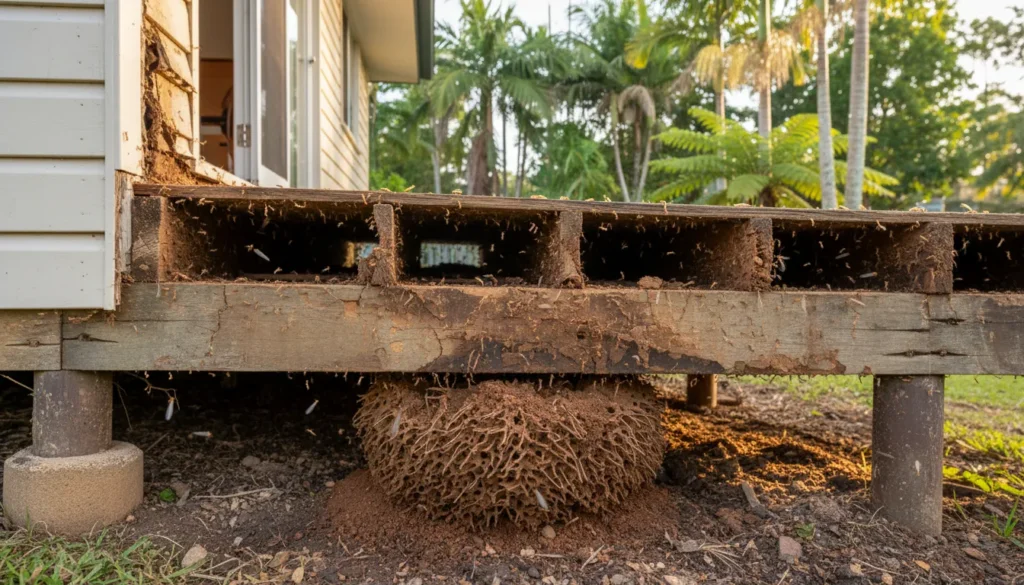
Most Australian pest inspections focus on termites and timber pests, looking for evidence of live activity, damage, and conducive conditions. Inspectors commonly check subfloors, roof voids where accessible, external perimeters, fences, outbuildings, and nearby timber.
A report usually notes risk factors such as poor ventilation, leaking plumbing, garden beds against walls, or stored timber. This is where pest and termite control becomes practical, because risk factors are often fixable even if no active termites are found.
How is a pest inspection different from a building inspection?
A building inspection focuses on structural condition, defects, and maintenance issues across the home. A pest inspection focuses on timber pests and conditions that attract them.
They overlap at timber damage, but they do not replace each other. Buyers who only order a building report may miss the pest specialist’s tools and experience, which is why pest and termite control due diligence often means booking both, either separately or as a combined service.
Which Australian property types tend to have higher termite exposure?
Any property with timber elements can be exposed, but risk increases with moisture, concealed entry points, and older construction. High-risk examples include:
- Homes with subfloors and limited ventilation
- Properties with garden beds, sleepers, or timber landscaping against walls
- Older homes with extensions where detailing is inconsistent
- Bushland-adjacent blocks, or suburbs with known termite history
For investors, pest and termite control risk can also rise where rental maintenance has been deferred.
What are the most common red flags that buyers can spot at open homes?
Buyers cannot diagnose termites at an inspection, but they can notice conditions that make them more likely. Key red flags include persistent damp smells, poor drainage, bubbling paint on skirting boards, cracked or soft timber trims, and gardens built up above weep holes.
They should also be cautious if external paths or decking conceal slab edges, or if there is lots of stored timber touching the house. These clues help buyers decide how seriously to prioritise pest and termite control checks.
Do termite barriers and previous treatments guarantee protection?
No. Barriers and treatments reduce risk, but they are not a lifetime promise. Physical barriers can be bridged by landscaping changes, and chemical barriers can degrade or be disturbed by renovations.
Buyers should ask for documentation that shows what was installed, when, and by whom. If there is a treatment certificate, it may support pest and termite control planning, but the property still needs an inspection to confirm current conditions.
What questions should buyers ask sellers or agents about pest history?
Direct questions often reveal whether the property has been proactively managed. Useful questions include:
- When was the last pest inspection, and can they provide the report?
- Has the property ever had termite activity or repairs?
- Is there a current termite management system or barrier, and what type?
- Have there been recent leaks, drainage issues, or bathroom renovations?
Clear answers help buyers estimate ongoing pest and termite control costs and whether further specialist checks are needed.
How should buyers interpret pest report wording like “conducive conditions” and “no access”?
“Conducive conditions” means the environment suits termites or timber pests, even if none were found on the day. It is a risk warning, not a deal-breaker by itself.
“No access” is more serious because it limits what the inspector can confirm. If large areas were inaccessible, buyers may need follow-up access, invasive inspection, or a price buffer. This is where pest and termite control due diligence becomes negotiation leverage.
Can buyers use pest findings to negotiate price or contract terms?
Yes, if the findings are specific and documented. Active termites, significant damage, or major risk conditions can justify renegotiation, repairs before settlement, or a price reduction.
In some cases, buyers may seek specialist timber pest advice, structural engineering input, or quotes for rectification. Strong documentation turns pest and termite control concerns into clear, pound-based decisions rather than vague fear.
How expensive can termite damage be if buyers get it wrong?
Costs vary widely, but concealed termite damage can become a major structural and renovation expense, particularly in older timber homes. Repairs may involve replacing framing, floors, skirting boards, doors, and sometimes addressing moisture sources that caused the problem.
For investors, the cost is not only repairs but vacancy time and reduced rental appeal. Good pest and termite control due diligence is often cheaper than even minor rectification work.
What does “practical due diligence” look like for investors across Australia?
Practical due diligence means repeating a consistent checklist across different markets, rather than relying on gut feel. Investors can:
- Order pest and building inspections with reputable local operators
- Review past reports and treatment certificates where available
- Budget for ongoing inspections, especially in high-risk areas
- Check drainage, subfloor ventilation, and landscaping details
- Avoid properties with repeated “no access” limitations without follow-up
This approach makes pest and termite control a manageable risk, not an unpredictable surprise.

Should buyers budget for ongoing inspections and maintenance after settlement?
Yes, particularly in termite-prone parts of Australia. Many professionals recommend regular inspections, often annually, but frequency should match the property’s risk profile and local conditions.
Ongoing costs may include inspections, minor drainage fixes, ventilation improvements, or barrier maintenance. Buyers who plan for pest and termite control early are less likely to be caught out when small issues become expensive ones.
What is the simplest way to reduce termite risk immediately after moving in?
The quickest wins are usually environmental. They include improving drainage, fixing leaks, keeping weep holes clear, reducing timber-to-ground contact, and keeping garden beds and mulch away from walls.
They should also store firewood and timber off the ground and away from the home, and ensure subfloor vents are unobstructed. These steps support pest and termite control without relying solely on chemical treatments.
Are buyers “meant” to worry, or just to verify?
They are not meant to panic, but they are meant to verify. In Australia, termites are common enough that ignoring them is not sensible, yet manageable enough that informed buyers can proceed confidently.
When buyers treat pest and termite control as standard due diligence, they protect their budget, reduce uncertainty, and make a clearer decision on whether a property is worth the price.